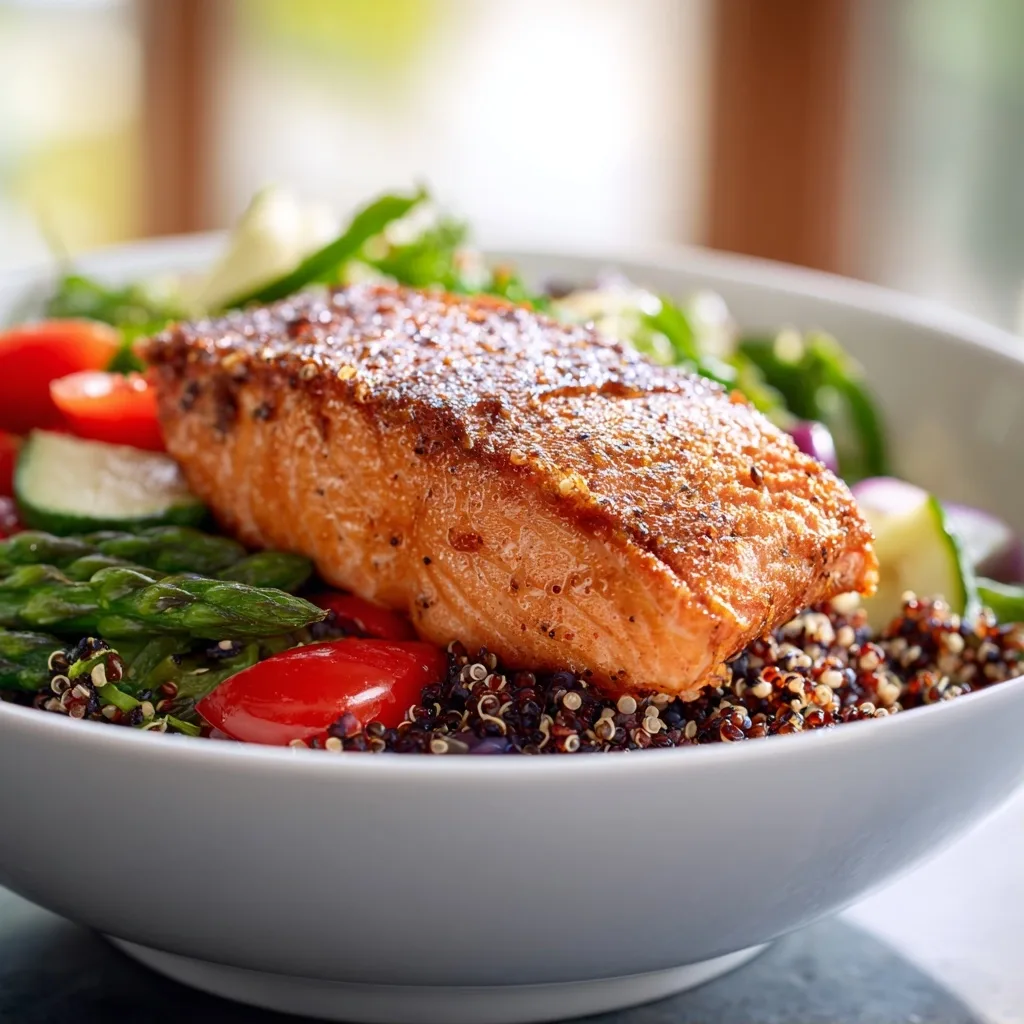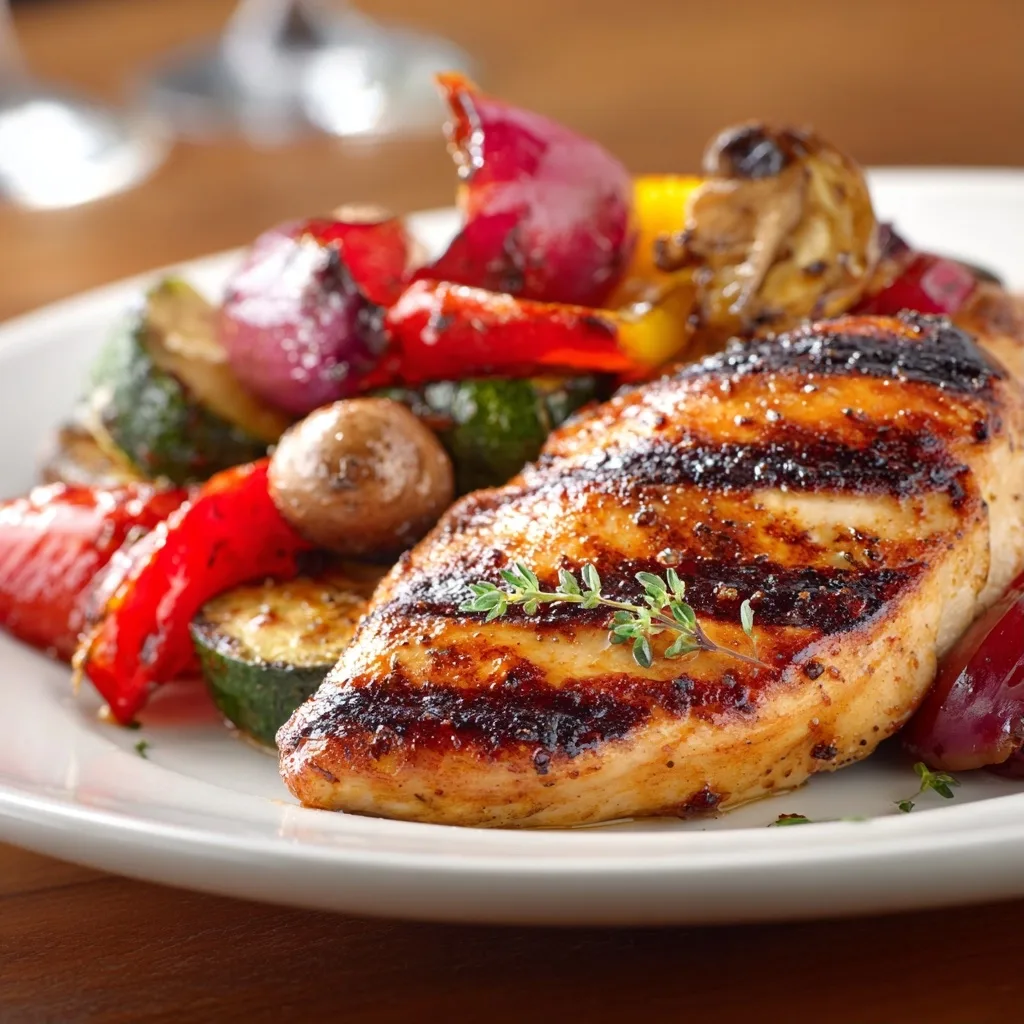
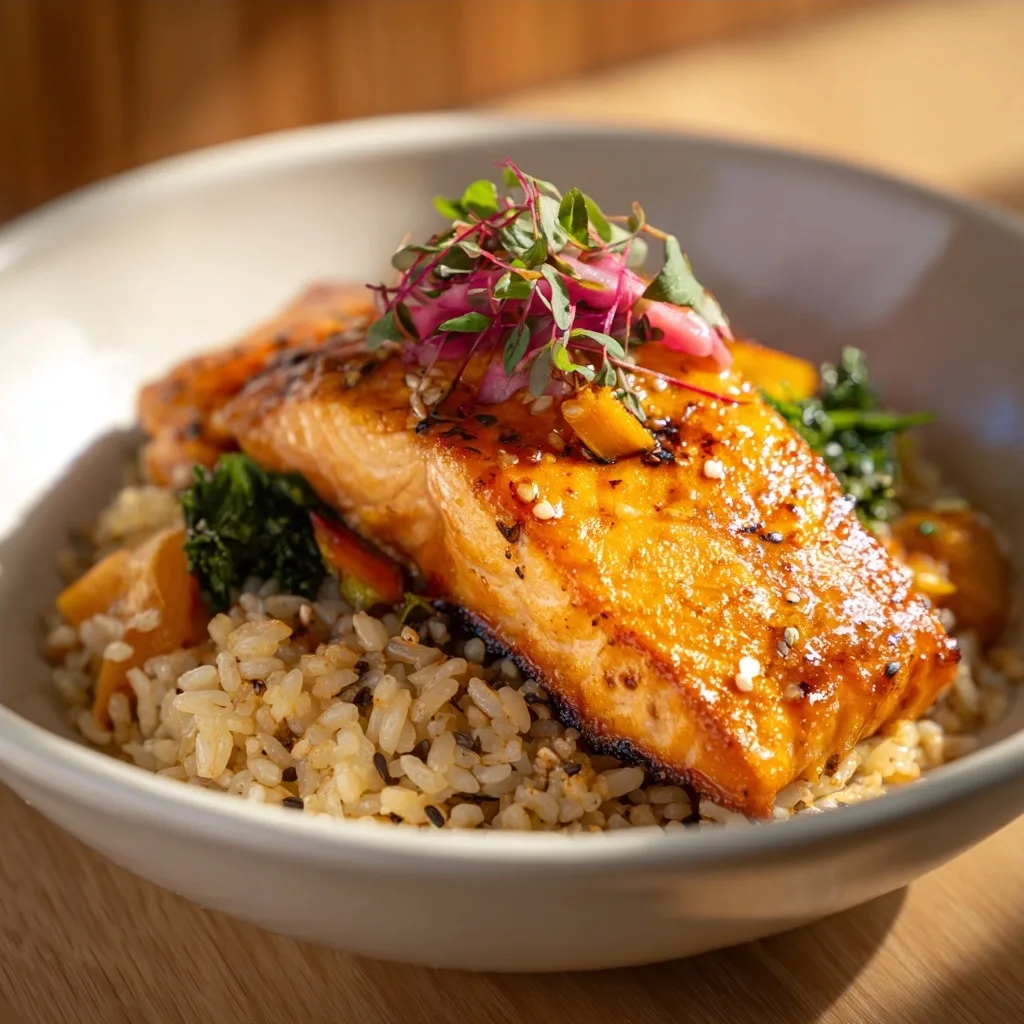
Last week, I found myself craving something fresh and satisfying for lunch, and that's when I whipped up this amazing salmon rice bowl. The combination of tender, flaky salmon with perfectly cooked rice and vibrant veggies brought a touch of flavors that made my taste buds dance.
This recipe stands out because I use a homemade sesame-miso dressing that adds a unique umami kick, enhancing the dish beyond the usual. It’s not just a salmon rice bowl; it’s a pleasureful fusion of textures and tastes that keeps me coming back for more.
Why You'll Love This Recipe
- Fresh Salmon Fillet: Using a fresh salmon fillet ensures a buttery texture and rich flavor, while the skin helps to retain moisture during cooking, resulting in a tender piece of fish. I’ve tried this with frozen salmon, and the difference in taste was noticeable.
- Short-Grain Rice: This type of rice is stickier than long-grain varieties, helping it to clump together nicely and absorb flavors from the sauce. I made a batch with jasmine rice once and found it didn’t hold the sauce as well, making the bowl less cohesive.
- Honey and Soy Sauce Balance: The combination of honey and soy sauce creates a pleasureful sweet-salty glaze that complements the salmon beautifully. I experimented with different ratios and found that this balance makes all the difference in flavor depth.
- Colorful Garnishes: Adding fresh cucumber, avocado, and scallions not only enhances the visual appeal but also introduces a variety of textures and flavors that enhance the dish. The first time I skipped the garnishes, and it felt flat compared to the vibrant bowl I usually make.
Ingredients
What You'll Need
- 1 lb fresh salmon fillet, skin-on, cut into 4 pieces: choose vibrant, firm fillets; the skin helps retain moisture during cooking.
- 1 cup short-grain rice, rinsed until water runs clear: this type of rice becomes sticky, perfect for holding together in the bowl.
- 2 cups water: needed for cooking the rice; adjust based on your rice brand instructions.
- 2 tbsp soy sauce: adds umami; tamari can be used for a gluten-free option.
- 1 tbsp honey: balances the saltiness of the soy sauce; feel free to substitute with maple syrup for a vegan option.
- 1 tbsp rice vinegar: adds a tangy note that enhances overall flavor; white vinegar can work in a pinch.
- 1 tbsp sesame oil: brings a nutty aroma; use toasted sesame oil for a deeper flavor.
- 1 tsp ginger, grated or minced: fresh ginger brightens the dish; powdered ginger won't deliver the same punch.
- 1 clove garlic, minced: provides depth; roasted garlic can be a sweeter alternative.
- 1 cup edamame, shelled, cooked: adds protein and a pop of color; frozen edamame is a convenient option.
- 1 cup cucumber, thinly sliced: for a refreshing crunch; English cucumbers have fewer seeds and are ideal.
- 1 medium avocado, sliced: adds creaminess; look for ripe avocados for the best texture.
- 2 tbsp scallions, chopped for garnish: adds a mild onion flavor and a splash of color.
- 1 tbsp sesame seeds, for garnish: toasted seeds enhance the nutty flavor and add crunch.
When shopping for fresh salmon fillets, look for ones that are bright in color and have a mild ocean smell. The combination of soy sauce, honey, and sesame oil creates a delicious balance in this salmon rice bowl, making each bite memorable.
Easy Substitutions
- Dairy-free: swap avocado for a dollop of dairy-free sour cream — this change will add creaminess without dairy, but the flavor will be less rich.
- Gluten-free: swap soy sauce for coconut aminos — the result will be slightly sweeter and less salty, but still delicious.
- Lower calorie: swap white rice for cauliflower rice — this will reduce the carbs significantly, but the texture will be much lighter.
How to Make This Recipe
Prep & Cook the Rice
Rinse the rice under cold water for about 2 minutes, until the water runs clear. This step removes excess starch and helps prevent the rice from becoming gummy.
In a medium saucepan, combine the rinsed rice with 2 cups of water. Bring it to a boil over high heat. You want to see those bubbles vigorously breaking the surface.
Once boiling, reduce the heat to low, cover, and simmer for 18 minutes. This low and slow cooking allows the rice to absorb all the water, resulting in fluffy grains.
Prepare the Sauce & Cook the Salmon
While the rice cooks, mix soy sauce, honey, rice vinegar, sesame oil, ginger, and garlic in a small bowl. The combination of these flavors creates a delicious sauce that will enhance your salmon rice bowl.
Heat a non-stick skillet over medium-high heat (about 375°F). Add the salmon pieces, skin-side down, and cook for 4-5 minutes. You want the skin to get crispy and the fish to cook halfway through.
Carefully flip the salmon and pour the sauce mixture over the top. Cook for an additional 2-3 minutes until the salmon is cooked through and the sauce is bubbling. This ensures the fish is flavored beautifully.
Assemble & Serve
Remove the salmon from heat and let it rest for 2 minutes. This helps keep the fish tender and juicy.
Fluff the cooked rice with a fork and divide it among four bowls. The light, airy texture of the rice is a perfect base for the toppings.
Top each bowl with a piece of salmon, edamame, cucumber, and avocado. Drizzle any remaining sauce from the pan over the bowls to enhance the flavors.
Garnish with chopped scallions and sesame seeds before serving. This adds a fresh crunch and beautiful presentation to your salmon rice bowl.
Tips & Tricks
The Perfect Salmon Sear
To get that beautiful, crispy skin on your salmon, make sure the skillet is hot enough before you add the fish. I usually wait until the oil shimmers and just starts to smoke before placing the salmon in the pan. This way, you get that satisfying sizzle, and the skin becomes golden and crispy while the flesh remains tender and flaky. Trust me, it’s worth the wait!
Avoiding Dry Rice
One common mistake I made early on was not letting the rice rest after cooking. Once the timer goes off, let the rice sit, covered, for about 5–10 minutes before fluffing it with a fork. This step allows the moisture to redistribute throughout the grains, resulting in perfectly cooked, fluffy rice instead of a sticky mess. It makes all the difference in your salmon rice bowl!
Pro Tips
- Use Fresh Ginger for Flavor: Fresh ginger adds a vibrant zing that ground ginger can't replicate. I often peel and freeze extra ginger, so I always have it on hand. Just grate what you need while it's still frozen for maximum freshness.
- Rest Salmon for Even Cooking: Allow your salmon to come to room temperature before cooking. This simple step helps ensure even cooking throughout the fillet, preventing the edges from overcooking while the center remains underdone. I usually take it out of the fridge about 30 minutes before I start cooking.
- Experiment with Toppings: Don't limit yourself to just the basics! Try adding sliced avocado, pickled radishes, or even a sprinkle of furikake for extra texture and flavor. I once topped a bowl with some crunchy seaweed, and it was a pleasureful surprise.
- Double the Sauce for Leftovers: Make extra sauce to drizzle over leftovers. The flavors deepen overnight, making your next day's lunch even more delicious. I've found that the sauce also works great on stir-fried veggies or grilled chicken!
Variations & Customizations
Flavor Twists
Mango Salsa Twist
Mix in 1 cup diced ripe mango, ½ cup diced red onion, and ¼ cup chopped cilantro with the edamame. This version bursts with tropical sweetness and a hint of spice, giving the bowl a vibrant color and refreshing flavor that dances on your palate.
Spicy Sriracha
Add 2 tablespoons of Sriracha to the soy sauce mixture before drizzling it over the salmon. This twist brings a fiery kick and a beautiful red hue, while the heat balances beautifully with the creamy avocado.
Seasonal Versions
Autumn Harvest
Swap out the cucumber for 1 cup roasted butternut squash cubes and add ½ teaspoon ground cinnamon to the rice while it cooks. The result is a warm, comforting bowl with tender squash that offers a sweet, nutty flavor, perfect for cozy fall evenings.
Winter Citrus
Incorporate 1 cup segmented blood oranges instead of cucumber and sprinkle with 1 tablespoon of chopped mint. This variation infuses the bowl with bright, tangy notes and an unexpected burst of color that feels like a refreshing winter escape.
Storage & Meal Prep
How to Store
Room Temperature
Salmon rice bowls are best enjoyed fresh, but if you need to leave them out, they can sit at room temperature for no more than 2 hours. Store them in an airtight container to keep them protected from any contaminants.
Refrigerator
You can keep your salmon rice bowl in the fridge for up to 3 days. Make sure to let it cool completely before placing it in a glass or plastic container with a tight lid. Avoid stacking while still warm; they'll get soggy on the bottom if you do!
Freezer
If you want to freeze them, they’ll last for about 2 months. I recommend flash freezing the salmon and rice separately on a sheet pan first, then wrapping them individually in plastic wrap and placing them in freezer bags. When you're ready to eat, thaw overnight in the fridge before reheating.
Meal Prep
For meal prep, doubling the recipe works great, allowing you to have leftovers for lunches. Prep the night before for quick assembly in the morning, or batch cook on the weekend. Store in glass containers for easy reheating. They'll stay fresh for about 3 days in the fridge, and just microwave for 1-2 minutes to warm them up!
Equipment You'll Need
Essential
Medium saucepan: A good-quality medium saucepan is crucial for cooking rice evenly. I prefer one with a heavy bottom to prevent scorching. If you have a non-stick option, it helps with easy cleanup after cooking.
Non-stick skillet: This is a must for perfectly searing the salmon without it sticking. A well-seasoned cast iron skillet can also work, giving a nice crust, but requires more attention to prevent sticking.
Nice to Have
Rice cooker: A rice cooker can take the guesswork out of cooking rice. It often results in perfectly fluffy rice, but I still love the hands-on method of using a saucepan for that extra control.
Frequently Asked Questions
Can I use frozen salmon for this recipe?
Yes, you can use frozen salmon, but make sure to thaw it completely before cooking. Thawing in the refrigerator overnight helps maintain its texture and flavor.
Why did my salmon come out dry?
Overcooking is often the culprit for dry salmon. Aim for a cooking time of 4-5 minutes per side, depending on thickness, and check for that beautiful, flaky texture.
What can I substitute for rice in this bowl?
Quinoa or cauliflower rice are excellent substitutes for traditional rice. They offer different textures and flavors while still pairing well with the salmon.
Is this dish gluten-free?
Absolutely! As long as you use gluten-free soy sauce or tamari, this Salmon Rice Bowl is naturally gluten-free. Just be sure to check all your labels.
What toppings can I add to my salmon rice bowl?
You can get creative with toppings like avocado slices, sesame seeds, or pickled vegetables. Fresh herbs, like cilantro or green onions, add a touch of flavor, too!
The Salmon Rice Bowl is a vibrant and satisfying dish that transforms simple ingredients into a pleasureful meal you'll crave. For an extra touch of flavor, don't skip the drizzle of soy sauce or your favorite dressing just before serving. I can't wait to hear how yours turns out, so feel free to leave a comment or share your creations on Pinterest!