Low Calorie Scallops with Cauliflower Puree
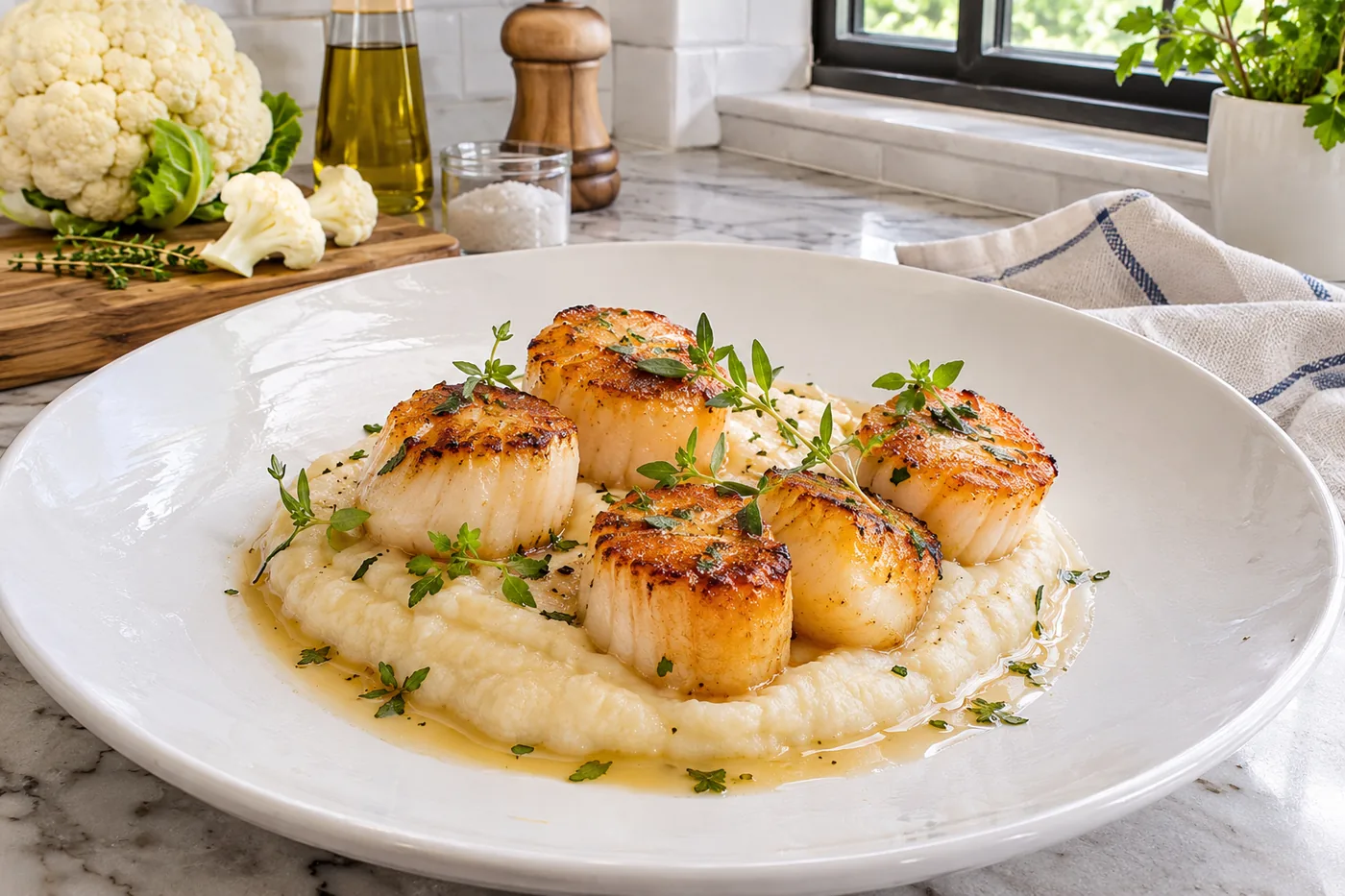
“Savor the delicate flavors of fresh scallops paired with a creamy cauliflower puree, perfect for a light and healthy meal.”
One evening, I was craving something light yet satisfying, and that’s when I whipped up these low calorie scallops with cauliflower puree. The creamy texture of the puree perfectly complements the delicate sweetness of the scallops, creating a dish I couldn't resist.
What sets this recipe apart is the simplicity and the way it highlights the natural flavors — no heavy sauces or unnecessary fuss, just pure, delicious goodness on your plate.
Why This Recipe Works
- Fresh Scallops Cook Quickly: Scallops are naturally delicate and cook in just a few minutes, maintaining their sweet flavor and tender texture. When seared properly, they develop a golden crust while staying juicy inside, making them perfect for a quick, low-calorie meal.
- Cauliflower Puree is Creamy and Satisfying: Blending cooked cauliflower with vegetable broth creates a velvety smooth puree that mimics the richness of heavy cream without the calories. I found that using broth instead of cream preserved the flavor while keeping it light.
- Garlic and Lemon Brighten the Dish: The combination of garlic and lemon juice adds a zesty punch that enhances the overall flavor profile. I love how the acidity from the lemon cuts through the richness of the scallops and the creaminess of the puree.
- Chives Add Freshness and Color: Chives not only bring a mild onion flavor but also a pop of color that makes the dish visually appealing. I tested it with and without chives, and the difference in freshness was noticeable.
Ingredients
What You'll Need
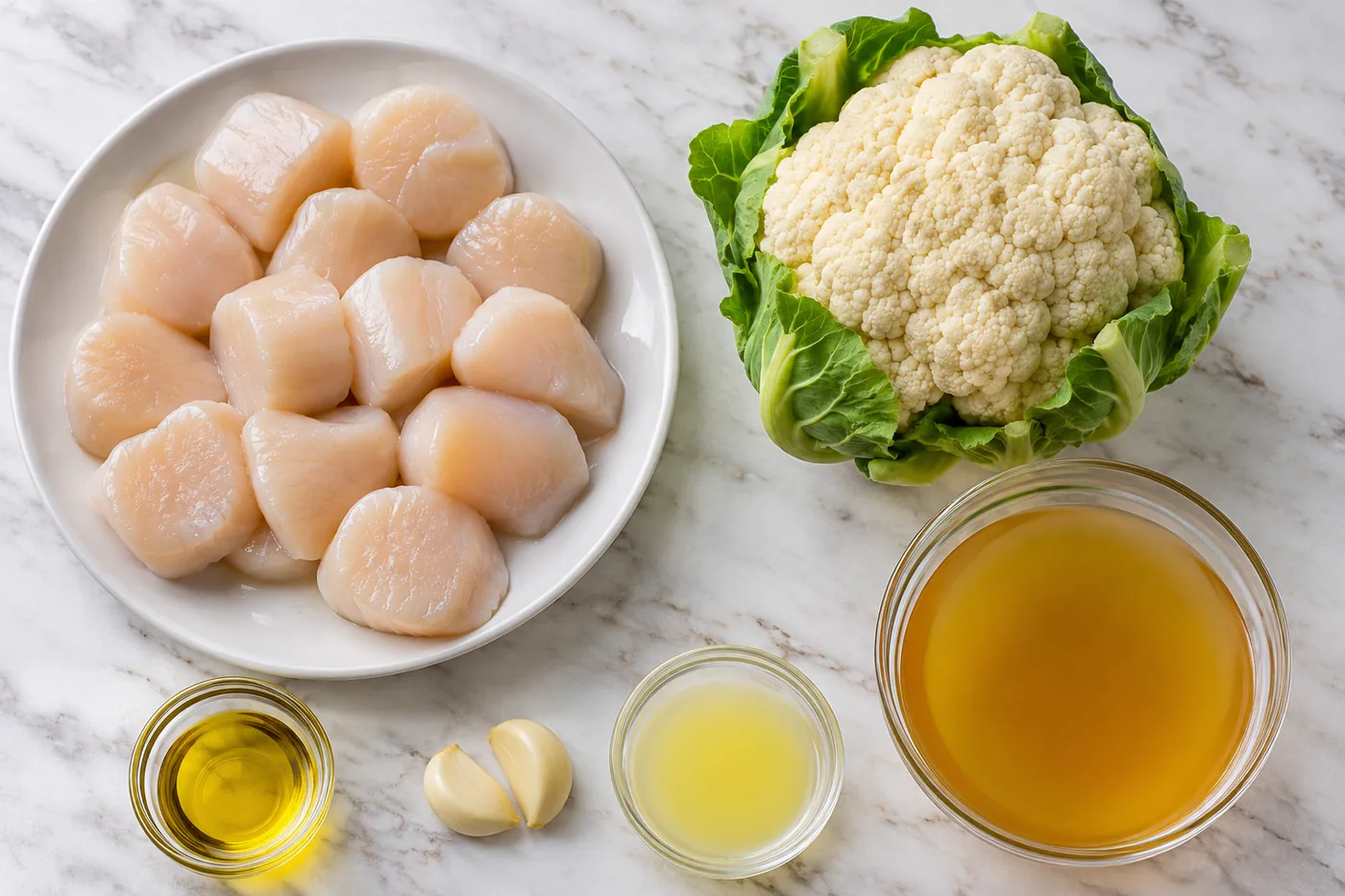
- 1 lb scallops fresh or thawed; look for ones that are plump and slightly translucent for the best texture.
- 1 head cauliflower cut into florets; choose a firm head with tightly packed florets for a creamy puree.
- 1 cup vegetable broth for cauliflower puree; it enhances the flavor and keeps the dish light.
- 2 tbsp olive oil for cooking scallops; a good quality oil adds richness and a fruity note.
- 2 cloves garlic minced; fresh garlic brings a wonderful aroma and depth to the dish.
- 1 tbsp lemon juice freshly squeezed; it brightens the flavors and balances the richness.
- 1 tsp salt divided; enhances all flavors, so using some in the puree is key.
- 1/2 tsp black pepper divided; adds a subtle heat and complexity to the dish.
- 1 tbsp chives chopped, for garnish; they add a fresh, oniony flavor and a pop of color.
When making low calorie scallops with cauliflower puree, fresh scallops are always best, but frozen works too if they're properly thawed. For cauliflower, a firm head will yield a smoother, creamier puree, while vegetable broth adds a much-needed flavor boost without unnecessary calories.
Easy Substitutions
- Dairy-free: swap the vegetable broth for coconut milk — result changes to a creamier, slightly sweeter puree.
- Gluten-free: this recipe is naturally gluten-free; no swaps needed!
- Lower calorie: use cooking spray instead of olive oil — result changes to a lighter dish with less richness.
Step-by-Step Instructions
Prepare the Cauliflower Puree
- Bring a large pot of salted water to a boil over high heat — this helps the cauliflower cook evenly and quickly. Once boiling, add the cauliflower florets and cook for 10 minutes until they are tender and easily pierced with a fork.
- Drain the cauliflower and transfer it to a blender. Add 1 cup of vegetable broth, 1/2 teaspoon of salt, and the juice of half a lemon — the broth adds flavor and the lemon brightens the puree. Blend the mixture on high for 2-3 minutes until it’s smooth and creamy, resembling thick pancake batter. If it seems too thick, add an extra tablespoon of broth.
Sear the Scallops and Serve
- In a skillet, heat 2 tablespoons of olive oil over medium-high heat, about 375°F — you’ll know it’s ready when the oil shimmers. Pat the scallops dry with a paper towel to ensure they sear nicely and season with the remaining 1/2 teaspoon of salt and black pepper.
- Carefully add the scallops to the skillet and sear for 2-3 minutes on each side. They should develop a golden brown crust and turn opaque — that’s how you know they’re cooked perfectly. If they stick to the pan, give them a little more time before flipping.
- Once cooked, remove the scallops from the skillet and let them rest for 1 minute. This helps the juices redistribute, keeping them moist.
Assemble and Serve
- On each plate, spoon a generous amount of the cauliflower puree as a base — it should be smooth and creamy, creating a lovely contrast with the scallops. Top the puree with the seared scallops, arranging them artfully.
- Finally, garnish with freshly chopped chives for a pop of color and flavor. The vibrant green adds a lovely visual touch and a subtle oniony kick, making these low calorie scallops with cauliflower puree tempting.
Tips & Tricks
Choosing the Right Scallops
When selecting scallops, freshness is key. I always look for those that are firm and slightly translucent, avoiding any that smell overly fishy. Fresh scallops should have a mild, sweet aroma. If you can, ask your fishmonger about the source — the best scallops often come from sustainable fisheries, which not only taste better but also help protect our oceans.
Perfecting Your Cauliflower Puree
To achieve that silky smooth texture in your cauliflower puree, try adding a splash of vegetable broth or a drizzle of olive oil as you blend. I made the mistake of skipping this step once, resulting in a grainy texture that just didn’t work with the scallops. The added liquid helps the cauliflower blend easily, creating a creamy base that pairs beautifully with the delicate scallops.
Pro Tips
- Sear Scallops in Batches: If your skillet isn't big enough, sear the scallops in batches. Overcrowding will lower the temperature and create steam rather than a beautiful golden crust. I once made this mistake and ended up with scallops that were more steamed than seared.
- Use a High-Quality Olive Oil: Opt for a high-quality extra virgin olive oil for that rich, robust flavor. It makes a noticeable difference in your cauliflower puree and when searing the scallops. I always have a bottle from my favorite local producer on hand for special dishes.
- Season Cauliflower Before Blending: Don’t forget to season the cauliflower before blending! A pinch of salt and a hint of lemon juice will enhance the flavors. I learned this tip the hard way when my first batch of puree tasted flat.
- Rest Scallops for Even Cooking: Let the scallops rest briefly after cooking. This allows the juices to redistribute, ensuring they remain tender and juicy. I’ve found that just one minute makes all the difference in texture.
- Add Fresh Herbs for Brightness: Garnish with fresh herbs like chives or parsley before serving. It adds a pop of color and freshness that really complements the dish. I love the way the herbs contrast with the creamy puree and scallops.
Variations & Customizations
Flavor Twists
Spicy Citrus Scallops
Add 1 tsp red pepper flakes and the zest of 1 lemon to the scallops while cooking. The result is a bright, zesty dish with a pleasureful heat that complements the sweetness of the scallops.
Herb-Infused Cauliflower
Stir in 1 tbsp fresh dill or thyme into the cauliflower puree while blending. This variation adds a fragrant, herbal note that balances the richness of the scallops beautifully.
Seasonal Versions
Autumn Pumpkin Twist
Blend in 1/2 cup canned pumpkin puree and 1/2 tsp ground nutmeg into the cauliflower puree. The pumpkin adds a creamy texture and a subtle sweetness, while the nutmeg gives it a warm, cozy flavor perfect for fall.
Storage & Meal Prep
Room Temperature
Scallops should not be left at room temperature for more than 2 hours, and they need to be stored in a shallow, airtight container to prevent them from drying out.
Refrigerator
In the refrigerator, these low calorie scallops with cauliflower puree can last for up to 2 days. Store them in an airtight container, ensuring they cool completely before sealing to avoid condensation.
Freezer
For freezing, scallops can be stored for up to 3 months. Flash freeze them on a sheet pan first to prevent sticking, then wrap individually in plastic wrap and place in a freezer bag. Thaw them overnight in the refrigerator before reheating.
Meal Prep
I recommend doubling the recipe for meal prep, as these scallops reheat beautifully. Prep them the night before or over the weekend, and store in airtight containers. They’ll stay fresh for about 2 days in the fridge, and to reheat, just warm them in a skillet over medium heat for about 3-4 minutes until heated through.
Frequently Asked Questions
Can I use frozen scallops for this recipe?
Yes, you can use frozen scallops, but make sure to thaw them completely before cooking. Pat them dry with paper towels to remove excess moisture, which helps achieve that beautiful sear.
What can I substitute for cauliflower in the puree?
If you want to switch it up, try using parsnips or potatoes for a different flavor and texture. Just be aware that the calorie count will change, so keep that in mind if you're watching your intake.
Why did my scallops turn out rubbery?
Rubbery scallops are often a result of overcooking. Make sure to cook them just until they're opaque and slightly firm to the touch, which usually takes only a few minutes on each side.
Can I make this dish dairy-free?
Absolutely! To keep it dairy-free, simply replace any butter in the cauliflower puree with olive oil or a dairy-free butter alternative. The flavor will still be rich and satisfying.
What should I serve with low calorie scallops?
Pair these scallops with a light salad or steamed greens for a fresh contrast. A squeeze of lemon over the top adds a lovely brightness that complements the dish beautifully.
These low calorie scallops with cauliflower puree are a pleasureful way to impress your guests while keeping things light and nutritious. If you want to add a pop of flavor, consider garnishing with fresh herbs or a squeeze of lemon just before serving. I'd love to hear how this dish turns out for you, so please leave a comment or share your creation on Pinterest!
Recipe Card
Low Calorie Scallops with Cauliflower Puree
Savor the delicate flavors of fresh scallops paired with a creamy cauliflower puree, perfect for a light and healthy meal.
checklist Ingredients
- 1 lb scallops
- 1 head cauliflower
- 1 cup vegetable broth
- 2 tbsp olive oil
- 2 cloves garlic
- 1 tbsp lemon juice
- 1 tsp salt
- 1/2 tsp black pepper
- 1 tbsp chives
menu_book Instructions
- 1
Bring a large pot of salted water to a boil over high heat.
- 2
Add cauliflower florets to the boiling water and cook for 10 minutes, until tender.
- 3
Drain the cauliflower and transfer to a blender.
- 4
Add vegetable broth, 1/2 tsp salt, and lemon juice to the blender.
- 5
Blend the cauliflower mixture on high until smooth and creamy, about 2-3 minutes.
- 6
In a skillet, heat olive oil over medium-high heat (about 375°F).
- 7
Season scallops with remaining salt and black pepper.
- 8
Add scallops to the skillet and sear for 2-3 minutes on each side, until golden brown and opaque.
- 9
Remove scallops from skillet and let rest for 1 minute.
- 10
To serve, spoon cauliflower puree onto plates, top with scallops, and garnish with chopped chives.