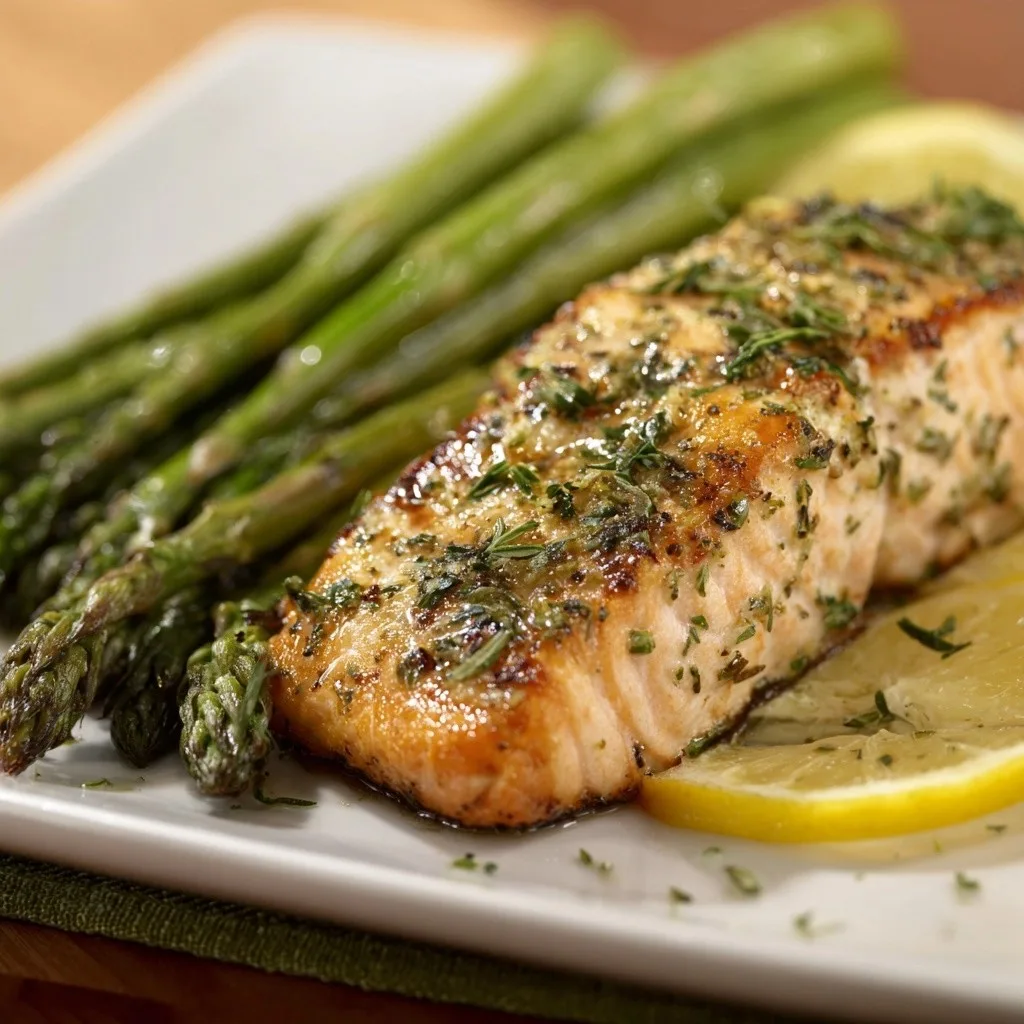
One sunny afternoon, I opened my fridge, searching for inspiration. That’s when I spotted some fresh salmon and asparagus, and I thought, “What if I combine them with lemon and herbs?” The result was a zesty Lemon Herb Salmon with Asparagus that became an instant favorite at my table.
This recipe stands out because it balances bright flavors with a hint of earthiness, creating a satisfying dish that feels both fresh and comforting. Plus, it’s not just delicious; it’s packed with protein, making it perfect for a nutritious lunch that keeps you energized all day.
Why You'll Love This Recipe
- Olive Oil's Moisture Retention: The olive oil coats the salmon and asparagus, creating a barrier that helps lock in moisture during cooking. I found that using just the right amount prevents the fish from drying out, resulting in a tender and flaky texture.
- Fresh Herbs Brighten the Flavor: The dill and parsley add vibrant flavor to the dish, enhancing the salmon's richness without overpowering it. I tested it with dried herbs, but fresh made a noticeable difference in the aroma and overall freshness of the meal.
- Lemon Juice for Balance: The acidity of lemon juice cuts through the richness of the salmon, providing a refreshing contrast that brightens each bite. I tried reducing the amount, but the dish felt flat without that zesty kick.
- Asparagus Adds Texture and Nutrition: Roasting the asparagus alongside the salmon gives it a satisfying crunch while keeping its vibrant green color. I learned that timing is key; the asparagus cooks perfectly when placed in the oven just before the salmon.
Ingredients
What You'll Need
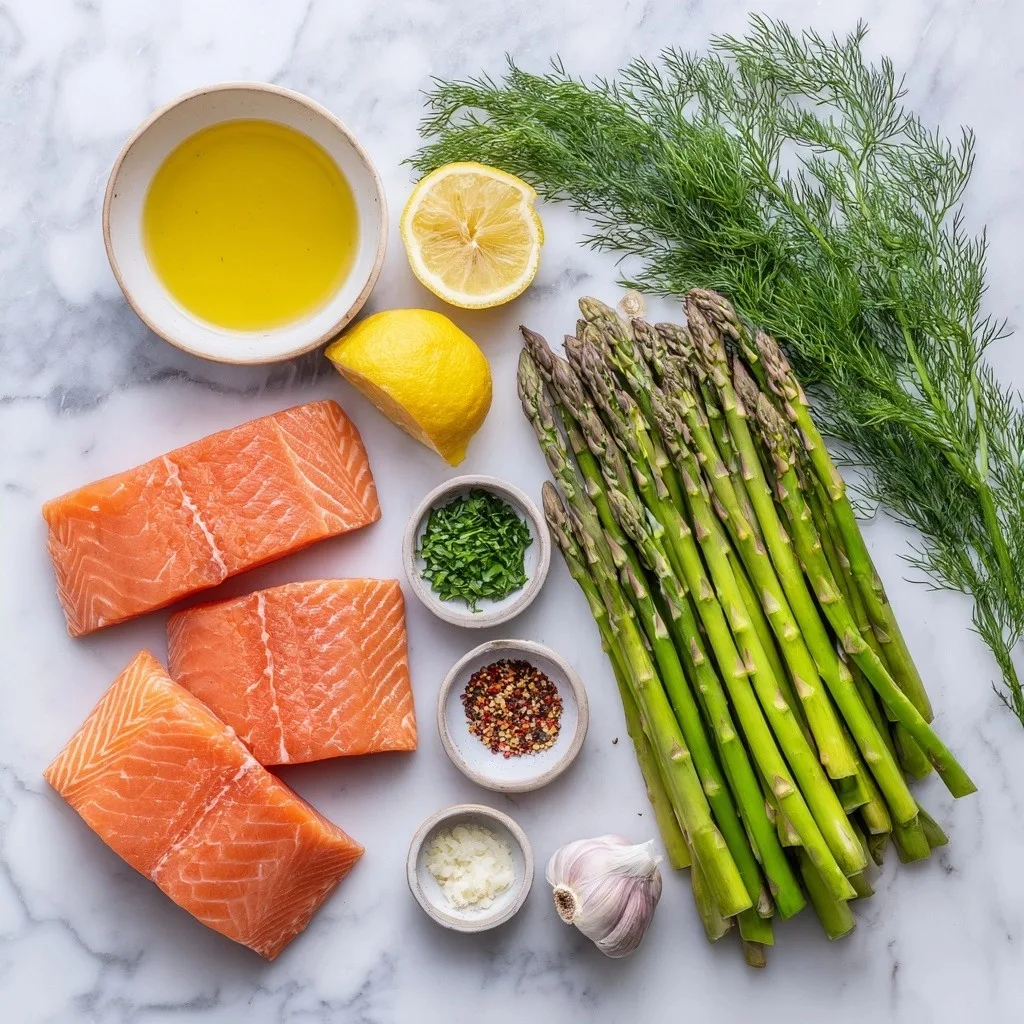
- 1.5 lb salmon fillets: choose skin-on for crispy texture or skinless for a leaner option; fresh salmon has the best flavor
- 1 bunch asparagus: look for bright green stalks that are firm; avoid limp or wilted ones for the best crunch
- 2 tbsp olive oil, divided: extra virgin olive oil is best for its rich flavor and health benefits
- 1 lemon zested and juiced: choose a fragrant lemon; zest adds brightness while juice brings acidity
- 2 cloves garlic, minced: fresh garlic gives a robust flavor; avoid pre-minced for the best taste
- 1 tbsp fresh dill, chopped: fresh dill offers a vibrant flavor; dried dill can work in a pinch but lacks freshness
- 1 tbsp fresh parsley, chopped: adds a pop of color and freshness; feel free to swap with other herbs like basil
- 1 tsp salt, to taste: enhances all flavors; adjust based on your dietary needs
- 1/2 tsp black pepper, to taste: freshly ground pepper provides a nice kick; adjust for your spice preference
- 1/2 tsp red pepper flakes, optional: adds a bit of heat; leave out if you prefer a milder dish
When shopping for ingredients for Lemon Herb Salmon with Asparagus, aim for the freshest salmon you can find. The combination of bright lemon and fresh herbs really enhances the dish, so don’t skip on the quality of those ingredients.
Easy Substitutions
- Dairy-free: swap regular butter for olive oil — you'll maintain flavor while keeping it dairy-free.
- Gluten-free: this recipe is naturally gluten-free, so no substitutions are needed.
- Lower calorie: use less olive oil and skip the red pepper flakes — it will slightly reduce the richness but still be delicious.
How to Make This Recipe
Prep & Mix
Preheat your oven to 400°F. This step ensures the salmon and asparagus cook evenly and develop that lovely roasted flavor.
In a small bowl, mix together the lemon zest, lemon juice, minced garlic, dill, parsley, salt, and black pepper until well combined. The aroma should be bright and fresh, setting up the perfect flavor for your salmon.
Place the salmon fillets on one side of a lined baking sheet. Drizzle half of the lemon herb mixture over the salmon and spread it evenly. This allows the fish to absorb all those wonderful flavors while baking.
On the other side of the baking sheet, arrange the asparagus. Drizzle with remaining olive oil, sprinkle with salt, and add optional red pepper flakes for a kick. The vibrant green of the asparagus will contrast beautifully with the salmon.
Bake
Bake in the preheated oven for 12-15 minutes. You'll know it’s done when the salmon flakes easily with a fork and the asparagus is tender. If the salmon looks a little undercooked, give it an extra minute or two, but be careful not to overbake it.
Remove the baking sheet from the oven and brush the salmon with any remaining lemon herb mixture. This adds an extra touch of flavor right before serving.
Cool & Serve
Let the salmon rest for 2-3 minutes before serving. This allows the juices to redistribute, ensuring every bite is moist and flavorful.
Plate the salmon alongside the asparagus, garnished with extra herbs if desired. The colors should pop, making it a beautiful dish as well as the palate.
Tips & Tricks
The Zest Factor
Using fresh lemon zest is crucial for this recipe. I’ve made the mistake of relying on bottled lemon juice before, and let me tell you, the flavor just doesn't compare. Fresh zest adds a bright, vibrant aroma and a punch of flavor that really enhances the dish. Just be sure to zest only the yellow part of the skin; the white pith underneath can be bitter, and we definitely don’t want that in our salmon!
Selecting Perfect Asparagus
When it comes to asparagus, freshness is key. Look for firm stalks with tightly closed tips. I once bought a bunch that was a bit limp, thinking they’d still work, but they ended up mushy and sad. If you can, choose thinner stalks for a more tender bite. Also, trim the bottom ends before cooking — they can be woody and tough, which ruins the lovely texture of this dish.
Pro Tips
- Use a meat thermometer: Salmon should be cooked to an internal temperature of 145°F. This ensures it's perfectly flaky and not overcooked. I always keep my thermometer handy to avoid guesswork.
- Marinate overnight for deeper flavor: Letting the salmon sit in the lemon herb mixture overnight enhances the flavors beautifully. I made this once on a whim and was blown away by how much better it tasted the next day!
- Blanch asparagus for vibrant color: Quickly blanching asparagus in boiling water before roasting locks in that bright green hue and ensures it's tender-crisp. It also shortens the roasting time, so you get a great texture without losing color.
- Use skin-on salmon for moisture: Cooking salmon with the skin on helps retain moisture and adds a delicious crispiness. I often find that removing the skin after baking is much easier, and it prevents the fish from drying out.
- Experiment with fresh herbs: While dill and parsley are classic, don’t hesitate to mix in some fresh basil or tarragon for an unexpected twist. I once swapped in some basil and was amazed at the fresh, aromatic flavor it brought!
Variations & Customizations
Flavor Twists
Cilantro Lime Salmon
Replace the dill and parsley with 1 tbsp fresh cilantro, and substitute the lemon juice with the juice of 2 limes. This version has a zesty kick that brightens the salmon, giving it a fresh, summery feel. The vibrant green of the cilantro adds a lovely contrast to the pink salmon, making it visually appealing as well.
Honey Mustard Glaze
Mix together 2 tbsp honey and 1 tbsp Dijon mustard, then spread this mixture over the salmon before baking. The honey mustard glaze creates a beautiful caramelized crust that’s sweet and tangy. It adds a pleasureful depth of flavor that pairs wonderfully with the asparagus, which still retains its crispness.
Seasonal Versions
Fall Herb Fusion
Swap the dill and parsley for 1 tbsp fresh thyme and 1 tbsp fresh sage. You can also add 1/2 cup diced butternut squash alongside the asparagus. This autumn-inspired dish offers earthy notes and a warm, comforting aroma that fills your kitchen, perfect for cozy dinners.
Spicy Mediterranean Twist
Add 1 tsp smoked paprika and 1/2 cup chopped sun-dried tomatoes to the mix. This variation transforms the original recipe into a Mediterranean delight, full of flavors that are both smoky and slightly sweet. The sun-dried tomatoes add a chewy texture and a vibrant splash of color, making the dish tempting.
Storage & Meal Prep
How to Store
Room Temperature
Lemon Herb Salmon with Asparagus should not be left out for more than two hours. If you have leftovers, store them in an airtight container to keep them fresh.
Refrigerator
You can keep the salmon and asparagus in the fridge for up to three days. Make sure they cool completely before placing them in a glass or plastic container with a tight lid. If you stack them while still warm, they'll get soggy on the bottom.
Freezer
This dish can be frozen for up to two months. I recommend flash freezing the salmon and asparagus on a sheet pan first, then wrapping them individually in plastic wrap and aluminum foil. To thaw, simply place them in the refrigerator overnight before reheating.
Meal Prep
For meal prep, I suggest doubling the recipe to have enough for several meals throughout the week. Prep it the night before and store in individual containers for easy grab-and-go lunches. They’ll stay fresh in the fridge for up to three days. When reheating, pop them in the microwave for about 2-3 minutes, or until heated through, ensuring you don’t overcook the salmon.
Equipment You'll Need
Essential
Baking sheet: A sturdy, rimmed baking sheet helps catch any drippings and ensures even cooking. I prefer a heavy-duty one because it distributes heat well, preventing hotspots that can scorch your salmon or undercook your asparagus.
Parchment paper or aluminum foil: Lining your baking sheet is a must for easy cleanup and to prevent sticking. Parchment gives a non-stick surface and can help with browning, while foil is great for a quicker cleanup but can sometimes cause steaming if wrapped too tightly.
Nice to Have
Instant-read thermometer: This tool is perfect for checking the doneness of your salmon. It ensures your fish is cooked just right, avoiding that overcooked, dry texture that nobody wants. A good thermometer gives you peace of mind, making it easier to achieve flaky, tender results.
Frequently Asked Questions
Can I use frozen salmon for this recipe?
Yes, you can use frozen salmon, but make sure to thaw it completely before cooking. This helps ensure even cooking and better texture.
What can I serve with Lemon Herb Salmon and Asparagus?
Pair this dish with a light salad or a side of quinoa for a complete meal.
Why did my salmon turn out dry?
Dry salmon often results from overcooking it. Using a meat thermometer can help you achieve the perfect internal temperature of 145°F.
How can I make this recipe gluten-free?
This recipe is naturally gluten-free as it contains no flour or gluten-based products. Just double-check any marinades or sauces you might want to add.
What herbs can I substitute for dill?
If you don't have dill, fresh tarragon or basil can work well as alternatives. They each add a different flavor twist while still complementing the salmon nicely.
Lemon Herb Salmon with Asparagus is a vibrant, flavorful dish that brightens up any dinner table — it’s a favorite in my house! For an extra kick, squeeze fresh lemon juice just before serving. I can’t wait to hear how yours turns out, so be sure to drop a comment or share your experience with me on social media!